Korean Instant Ramen Guide (2026): Shin, Jin, Buldak, Neoguri, Chapaghetti Compared by Heat and Price, the 2026 Price Cuts, How to Cook It Properly and What a Bowl Costs — Ramen Picker
Shin Ramyun 3,400 Scoville, Buldak 4,404, 2x Buldak 10,000. Five-packs from ₩2,480 online; Nongshim and Ottogi cut prices in 2026. Pick by heat, cost per bowl.
Korea eats more instant noodles per person than any country — about 75 servings a year — and the aisle reflects it: forty brands, three heat scales, cups, bowls, bags, stir-fry and soup. For a visitor it is the cheapest possible meal and the most common souvenir; for a resident it is a pantry staple with a price the government watches. This part ranks the ones worth knowing by heat and price, explains the 2026 price cuts, and works out what a bowl costs however you buy it.
Ramen picker and cost per bowl
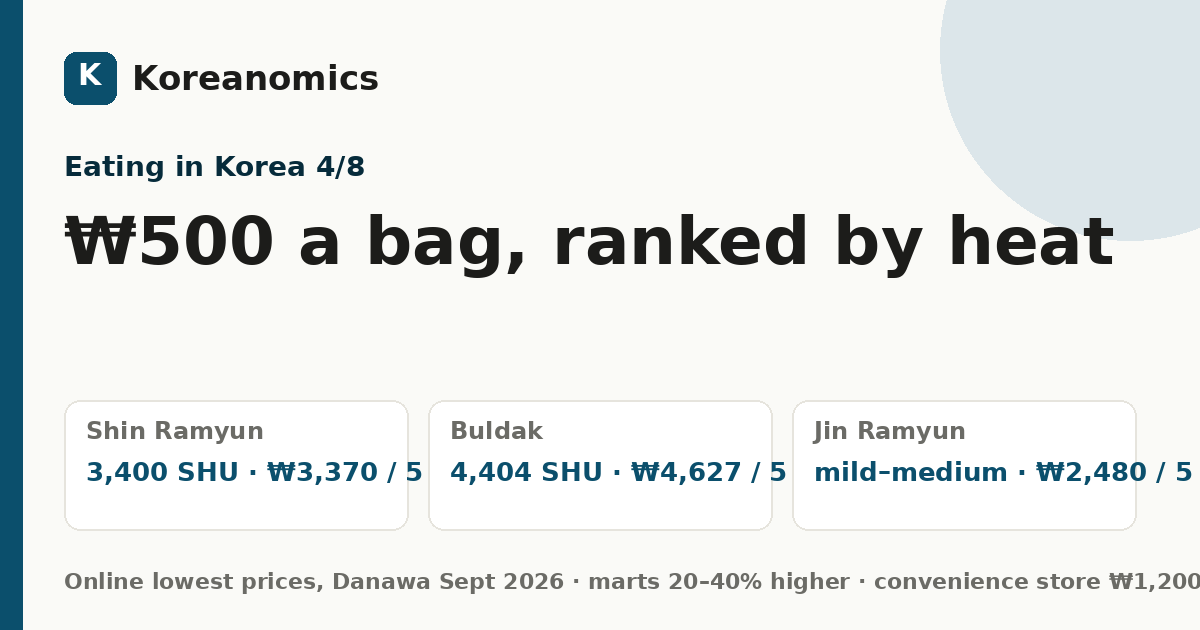
Scoville figures are the manufacturers' published or widely cited values (Shin 3,400, Shin The Red 7,500, Buldak 4,404, 2x Buldak 10,000, Yeol 5,013, Angry Neoguri 6,080); a jalapeño is 2,500–8,000. Prices: online lowest for 5-packs (Danawa, September 2026) — Shin ₩3,370, Jin ₩2,480, Buldak ₩4,627, Carbo Buldak ₩7,100; convenience-store singles ₩1,200–1,600, cups ₩1,300–2,000.
The heat scale
Korean packets carry a chilli icon scale, not Scoville, and the two do not always agree. Published or widely cited Scoville values for the ones people ask about:
| Noodle | SHU | Type |
|---|---|---|
| Chapaghetti 짜파게티 | ~0 | dry, black bean |
| Jin Ramyun mild 진라면 순한맛 | ~500 | soup |
| Jin Ramyun spicy 진라면 매운맛 | ~2,000 | soup |
| Shin Ramyun 신라면 | 3,400 | soup |
| Buldak 불닭볶음면 | 4,404 | dry |
| Yeol Ramyun 열라면 | 5,013 | soup |
| Angry Neoguri 앵그리너구리 | 6,080 | soup |
| Shin The Red 신라면 더레드 | 7,500 | soup |
| Teumsae 틈새라면 | 9,416 | soup |
| 2x Buldak 핵불닭볶음면 | 10,000 | dry |
For scale, Tabasco is about 2,500 and a habanero 100,000+. Shin Ramyun is medium by Korean standards and hot by most others; Buldak's heat is concentrated in a sauce you can under-dose — use half the sachet the first time. The "Carbo" and "Cheese" Buldak variants are the beginners' route.
Prices, and the 2026 cut
Instant noodles are a political price in Korea: the makers cut in 2023, raised in 2025, and in March 2026 cut again after the government leaned on food companies — Nongshim -7% on 16 products, Ottogi -6.3% on 8, Samyang -14.6% on the original Samyang Ramen, from April shipments — while Shin Ramyun and Buldak were left out. On the shelf in September 2026 the lowest online prices were Shin Ramyun 5-pack ₩3,370 (list ₩3,900), Jin Ramyun spicy 5-pack ₩2,480, Buldak 5-pack ₩4,627, Carbo Buldak ₩7,100, and a Nongshim three-flavour 15-pack (Shin, Ansungtangmyeon, Chapaghetti) ₩10,710 — under ₩700 a bag. A supermarket shelf is 20–40% above those; a convenience store single is ₩1,200–1,600 and a cup ₩1,300–2,000. Buying to take home: Korean prices are half of what the same packet costs abroad, and a 20-pack case of Shin (about 2.4 kg) fits under the airline weight limit; check your country's rules on the beef-flavoured soup base (Australia and the US restrict some).
Cooking it the Korean way
The packet's water volume — usually 500–550 ml — is the recipe. Boil the water, add the powder and flake sachets first so the broth seasons, then the noodles, 4–4.5 minutes, lifting them out of the water with chopsticks a few times (공기 넣기) for a springier bite. Last minute: an egg (drop it in whole and do not stir for a yolk; stir for ribbons), spring onion, a slice of processed cheese on Shin, a handful of kimchi, dumplings, rice cake, or leftover rice in the last of the broth. Dry noodles (Buldak, Chapaghetti, 비빔면): boil, drain leaving 2–3 tablespoons of water, mix in the sauce over low heat. The thin yellow 양은냄비 pot exists because it boils fast and the lid is the plate; eating straight from it is correct.
The convenience-store ramen cooker (Part 3) does all this for a bag ramen and an egg in a foil bowl in about four minutes, which is the best ₩2,500 meal in the country at 2 am.
The ones to bring home
Shin Ramyun (the safe gift), Buldak Carbo (the Instagram gift), Neoguri (for people who like udon), Chapaghetti plus Neoguri to make jjapaguri from a certain film, Jin Ramyun mild for children, and the two that do not export well because they are seasonal: 비빔면 (cold spicy summer noodles) and 김치사발면 (kimchi cup). Next, the shops where you buy all this by the case: supermarkets, Costco, markets and the delivery apps that undercut them.
Frequently asked questions
Which one should a first-timer buy?
Jin Ramyun mild (진라면 순한맛) if you do not like heat, Shin Ramyun (신라면) for the classic medium-hot Korean bowl, Neoguri (너구리) for a thick seafood-udon style, Chapaghetti (짜파게티) for the black-bean noodle that is not spicy at all, and Buldak (불닭볶음면) only if you already eat hot food — it is a dry stir-fry noodle with a sauce that starts at 4,404 Scoville and the 2x version doubles it.
What did the 2026 price cuts change?
In March 2026, under government pressure on food prices, Nongshim cut 16 products by an average 7% (Ansungtangmyeon −5.3%), Ottogi cut 8 by 6.3% and Samyang cut its original Samyang Ramen by 14.6%, all on shipments from April. The flagships were excluded: Shin Ramyun and Buldak did not move. Prices had risen in 2025, so this took shelves roughly back to 2024 levels.
How do Koreans cook it?
550 ml of water (the packet says how much — it matters), boil, add the soup base and flakes first, then the noodles, 4–4.5 minutes lifting the noodles into the air with chopsticks a few times for chew, and finish with an egg dropped in for the last minute, spring onion, a slice of cheese for Shin, or kimchi on the side. Eat from the pot with the lid as a plate — the pot is a thin yellow aluminium one for exactly this reason.
Where is it cheapest?
Online (Coupang, the mart apps) in 5-packs or 20-pack cases: Shin Ramyun's 5-pack was ₩3,370 at the lowest online seller in September 2026, list ₩3,900. A supermarket shelf runs 20–40% higher; a convenience store sells single bags for ₩1,200–1,600 and cups for ₩1,300–2,000 — double the per-bag price, for the hot water and the seat.
Sources
※ This article summarises publicly available rules as of the date shown. Your situation may differ; confirm with the relevant Korean authority (National Tax Service, Ministry of Employment and Labor, National Pension Service, Immigration) or a licensed professional before making decisions.