A Korean Pantry for ₩60,000 (2026): The 12 Staples, What They Cost, How Long They Keep, and Five Dishes Costed per Serving — Cost-per-Serving Calculator
Gochujang ₩5,140–9,340, doenjang from ₩2,150, soy sauce ₩4,000, sesame oil ₩4,800, kimchi ₩7,825/kg (2026). Twelve staples, storage, five recipes costed.
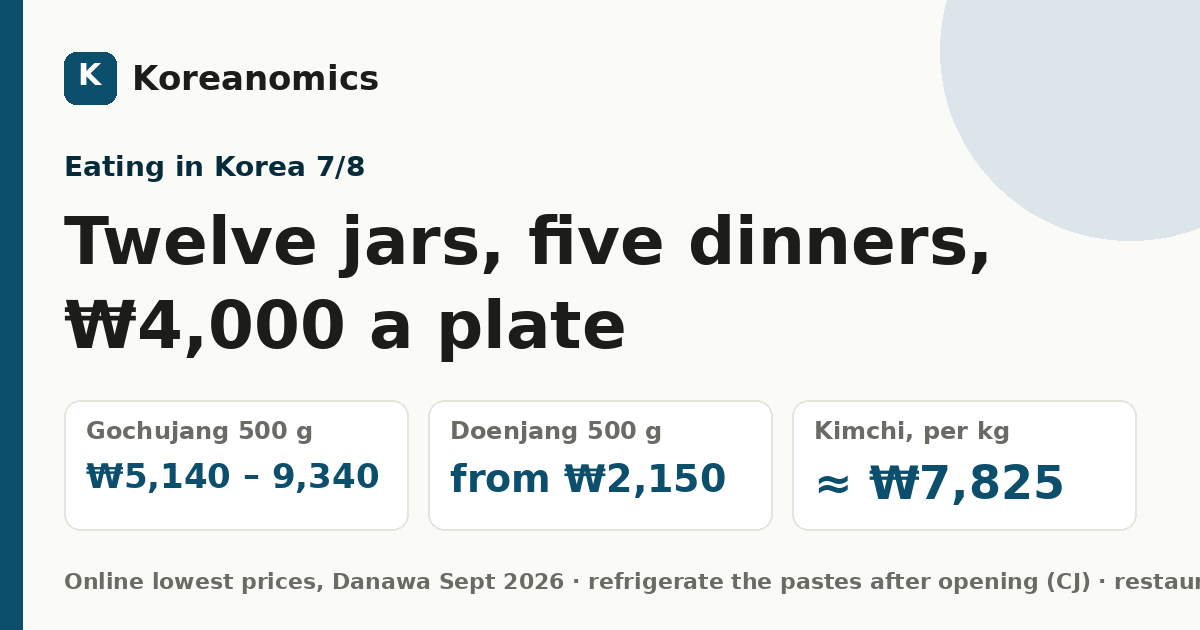
Everything that makes food taste Korean comes from a dozen jars, and in Korea those jars are cheap: a full starter pantry is about ₩60,000 online, less than three delivery dinners. This part lists the twelve staples with 2026 prices and storage, then costs five weeknight dishes per serving, with a calculator for what a serving of each costs you against the restaurant price from Part 2.
Cost-per-serving calculator (2026 prices)
Ingredient costs use online lowest prices (Danawa, September 2026) for the jars and KAMIS retail (August 2026) for pork belly (₩2,802/100 g), eggs (₩7,271/30) and rice (₩62,673/20 kg); vegetables and tofu are our estimates. Restaurant comparison: Seoul Consumer Agency averages — kimchi stew set ₩8,769, bibimbap ₩11,615. Paste amounts are per-tablespoon shares of a 500 g tub.
The twelve staples
| # | Item | Korean | Online lowest (Sept 2026) | Keeps |
|---|---|---|---|---|
| 1 | Red pepper paste | 고추장 | ₩5,140–9,340 / 500 g | Fridge after opening; months |
| 2 | Soybean paste | 된장 | ₩2,150–4,200 / 500 g | Fridge after opening; months |
| 3 | Brewed soy sauce | 양조간장 (샘표 501) | ₩4,000 / 500 ml · ₩18,000 / 1.7 L | Cupboard; a year |
| 4 | Sesame oil | 참기름 | ₩4,800–8,610 / 320 ml | Dark cupboard; 6–12 months |
| 5 | Red pepper flakes | 고춧가루 | Korean ₩15,900–16,930 / 500 g; imported ₩6,000–9,000 | Freezer; a year |
| 6 | Kimchi | 포기김치 | ≈ ₩7,825 / kg (3 kg ₩24,720) | Fridge; sours over weeks — stew it |
| 7 | Rice | 쌀 | ₩28,000–36,000 / 10 kg | Cool cupboard; months |
| 8 | Dried anchovies | 국물용 멸치 | ₩8,000–15,000 / 300 g | Freezer |
| 9 | Kelp | 다시마 | ₩3,000–6,000 / 100 g | Cupboard; a year |
| 10 | Canned tuna | 동원참치 | ₩2,500–3,500 / 150 g | Cupboard |
| 11 | Fish sauce | 액젓 (멸치/까나리) | ₩3,000–6,000 / 500 ml | Fridge; a year |
| 12 | Rice vinegar, sugar, salt, garlic, spring onion | — | ₩5,000 for the set | — |
Prices are the lowest online listings in September 2026 (Danawa); a mart shelf is 20–40% higher, a market cheaper for the fresh items. Items 1–5 plus rice and kimchi are the working minimum — about ₩45,000–60,000 depending on the gochugaru you choose. Buy the 500 g tubs, not the 1 kg, until you know your consumption; refrigerate the pastes once open, as CJ's own guidance says, and do not worry when gochujang darkens.
Five dishes, costed
Kimchi jjigae (김치찌개, 20 min): fry 80 g sliced pork belly in a little oil, add 150 g sour kimchi and a spoon of its juice, a teaspoon each of gochugaru and gochujang, garlic, 400 ml water or anchovy stock; simmer 15 minutes, add half a block of tofu and spring onion. About ₩5,000 a serving with rice — the pork is most of it — against ₩8,769 for the restaurant set. The older the kimchi the better the stew — this is what the last third of the tub is for.
Doenjang jjigae (된장찌개, 20 min): a stock from a few anchovies and a piece of kelp (10 minutes, remove), 1½ tablespoons doenjang stirred in, diced potato, zucchini, onion, a chilli, tofu last. ₩3,000 a serving. Less sharp than kimchi stew and the daily-lunch soup of the country.
Bibimbap (비빔밥, 25 min, or 5 with leftovers): rice, a fried egg, three or four blanched or sautéed vegetables dressed with salt and sesame oil (spinach, bean sprouts, carrot, zucchini — whatever is cheap), a tablespoon of gochujang mixed with a teaspoon of sesame oil and a little sugar. ₩3,500–4,000 against ₩11,615.
Jeyuk bokkeum (제육볶음, 15 min): 150 g thin pork (shoulder or belly) in a marinade of 1 tbsp gochujang, 1 tbsp gochugaru, 1 tbsp soy, 1 tsp sugar, garlic, sesame oil; stir-fry hot with onion and spring onion; eat in lettuce wraps with rice. ₩6,000–6,500 — the home version of barbecue night (Part 1) at a fifth of the price.
Gyeran-bap (계란밥, 5 min): hot rice, a fried or scrambled egg, a teaspoon of sesame oil, a tablespoon of soy, a pat of butter if you like, kimchi on the side. ₩1,200. Korea's student dinner, and better than it sounds.
Two techniques
Anchovy-kelp stock (멸치육수): 8–10 gutted dried anchovies and a palm-sized piece of kelp in 1 litre of water, simmer 10 minutes, strain — the base of most soups and the reason home doenjang jjigae tastes like the restaurant's. Make a litre and keep it three days. Yangnyeom (양념), the all-purpose sauce: equal parts gochujang and soy, half as much gochugaru and sugar, garlic, sesame oil — marinade for pork, dressing for noodles, dip for lettuce. If the pantry cost is a concern: everything above except Korean gochugaru is under ₩10,000, and the jars outlast the visa.
Cooking Korean at home has one complication for some readers — the fish sauce in the kimchi, the anchovies in the stock, the beef in the broth. The last part of the course is for vegetarians, vegans, Muslims and people with allergies.
Frequently asked questions
What are the absolute minimum staples?
Five: gochujang (red pepper paste), doenjang (soybean paste), soy sauce (양조간장, the all-purpose brewed kind), sesame oil and gochugaru (red pepper flakes). With rice, garlic, spring onion, eggs, tofu and a tub of kimchi you can cook most home Korean food. Fish sauce, rice vinegar, dashima (kelp) and dried anchovies come next; sugar, salt and neutral oil you have.
How long do the pastes keep?
Both are fermented and salted, so they do not spoil quickly, but the makers (CJ, for its Haechandle range) say to refrigerate after opening to keep colour and flavour; gochujang darkens over months, which is normal. Keep the surface smooth, use a clean spoon, and a 500 g tub lasts a household 3–6 months. Sesame oil keeps 6–12 months in a dark cupboard; gochugaru goes in the freezer, where it keeps its colour for a year.
Which brand should I buy?
For a first pantry the mass brands are good and cheap: Haechandle (해찬들, CJ) or Chung Jung One (청정원) for gochujang and doenjang, Sempio (샘표) 501 for soy sauce, Ottogi for sesame oil, Jongga (종가) or Bibigo for kimchi. Gochugaru is the one where origin matters — Korean-grown (국산) is ₩15,900–16,930 per 500 g online against ₩6,000–9,000 for imported, and tastes sweeter and brighter; buy Korean for kimchi, imported for stews.
Is cooking at home really cheaper than eating out?
For Korean food, yes by half or more: a kimchi stew costs about ₩5,000 a serving in ingredients against ₩8,769 for the restaurant set; bibimbap about ₩4,000 a bowl against ₩11,615. The exceptions are dishes built on beef and restaurant-style barbecue, where the meat is the cost wherever you eat it, and anything needing Western ingredients.
Sources
※ This article summarises publicly available rules as of the date shown. Your situation may differ; confirm with the relevant Korean authority (National Tax Service, Ministry of Employment and Labor, National Pension Service, Immigration) or a licensed professional before making decisions.